AUDI 6H109021G Hybrid Engine Motor Cylinder Head 2.0
fits model: Q5, Turbo. make: Audi. year: 2013–2017.
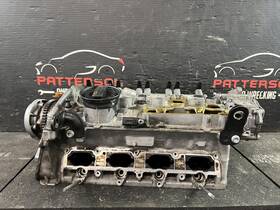
( Manufacturer Part Number: 6H109021G ), ( Model: AUDI-Q5 ), ( Interchange: 306-59475 ), ( Type: Cylinder Head ), ( Id: 1a720fd4-f5ac-4733-a5f7-3485cafae8e5 ), ( Country Of Origin: Germany )
Review AUDI 2.0 Non hybrid Engine Motor Cylinder Head fits Q5 TURBO 2013–2017
The **Audi 6H109021G engine cylinder head** is a precision-engineered component designed exclusively for the **2.0-liter turbocharged non-hybrid (TFSI) inline-four cylinder powertrain** found in Audi Q5 models produced between **2013 and 2017**. This critical assembly serves as the uppermost section of the engine s combustion chamber, housing the **intake and exhaust valves, valve springs, rocker arms, and the camshaft drive mechanism**, all of which work in unison to optimize airflow, combustion efficiency, and overall engine performance. Crafted from **high-grade cast aluminum alloy**, the cylinder head is engineered to withstand extreme thermal and mechanical stresses, ensuring durability under the high-pressure conditions generated by the turbocharged induction system. Its **integrated valve cover** features a **sealed gasket interface** to prevent oil leaks and maintain internal pressure, while the **intake manifold ports** are precision-machined to minimize turbulence and maximize volumetric efficiency, contributing to the engine s responsive throttle response and torque delivery. The **exhaust manifold section** is designed to efficiently route exhaust gases away from the combustion chamber, reducing backpressure and enhancing exhaust flow critical for maintaining the turbocharger s efficiency and the engine s power output. This cylinder head also incorporates **Audi s advanced valve train system**, including **hydraulic lash adjusters** that eliminate the need for manual valve clearance adjustments, ensuring consistent performance throughout the engine s lifespan. Whether installed in a **Q5 2.0T with 245 or 272 horsepower**, this component plays a pivotal role in delivering the vehicle s signature blend of **smooth acceleration, refined turbo lag, and reliable longevity**, making it a cornerstone of Audi s high-performance TFSI architecture. For maintenance or replacement purposes, this part is a **direct-fit OEM component**, ensuring compatibility with the original engine design while adhering to Audi s stringent quality standards.
### **Pros and Cons of Buying an Audi Q5 (2013 2017) 2.0L Turbo Non-Hybrid Engine (Cylinder Head: 6H109021G)**
#### **Pros**
1. **Reliable Engine Core** The 2.0L turbocharged inline-four (EA888) is a well-regarded engine in Audi s lineup, known for its durability when properly maintained. It produces **245 252 hp** and **258 310 lb-ft of torque**, offering strong performance for its class.
2. **Good Fuel Economy** Compared to V6 or V8 models, the 2.0T is more efficient, averaging **20 25 MPG in the city** and **28 32 MPG on the highway**, depending on driving conditions.
3. **Turbocharged Performance** The turbocharged setup provides **quick acceleration** and a sporty feel, making it more engaging than naturally aspirated alternatives.
4. **Quattro AWD Standard** Audi s all-wheel-drive system is a major advantage in snow, rain, or off-road conditions, improving traction and safety.
5. **Quattro Sport Package Option** Some models (especially later years) came with **adaptive dampers, sport suspension, and a limited-slip differential**, enhancing handling and comfort.
6. **Quattro S (2015 2017) Upgrade** The **Quattro S** variant (2015 ) features a **tuned engine (272 hp)**, **adaptive suspension**, and **improved turbo response**, making it a more refined option.
7. **Quattro S Line & Prestige Trims** Higher trims included **premium interior materials, advanced infotainment, and driver aids**, improving comfort and tech features.
8. **Moderate Maintenance Costs** Compared to V6 or V8 engines, the 2.0T has **lower fuel and oil consumption**, reducing long-term costs.
9. **Resale Value** The Q5 holds its value reasonably well, especially models with **lower mileage or well-documented maintenance**.
10. **Aftermarket Support** The 2.0T engine has a **strong aftermarket presence**, with performance upgrades (turbo kits, exhaust, ECU tuning) available for enthusiasts.
---
#### **Cons**
1. **Turbo Lag (Early Models)** Some **2013 2014 2.0T engines** suffer from **turbo lag** due to a **smaller turbo** (compared to later models). This can make acceleration feel sluggish at low RPM.
2. **Oil Consumption Issues** The **2.0T engine is prone to oil burning**, especially in **high-mileage examples**. Some owners report **1 quart per 1,000 miles** or more, leading to frequent oil top-ups.
3. **Carbon Buildup on Intake Valves** Direct injection engines (like the 2.0T) are susceptible to **carbon deposits**, which can cause **rough idling, misfires, or reduced power**. A **carbon cleaning service** ( $300 $500) is often required every **50,000 70,000 miles**.
4. **Timing Chain Wear (Less Common but Possible)** While less frequent than in older engines, **timing chain stretch or guide wear** can occur over **150,000 miles**, requiring a **timing chain replacement ( $1,500 $2,500)**.
5. **Electrical & Infotainment Quirks** Early **2013 2015 models** had **MMI (Multi Media Interface) glitches**, slow response times, and **Bluetooth connectivity issues**. Later models (2016 ) improved with **touchscreen upgrades**.
6. **Suspension Wear** The **standard suspension** wears out around **80,000 100,000 miles**, requiring **shock absorber and bushings replacement ( $1,000 $1,500)**.
7. **Quattro Fluid Leaks** The **AWD system** can develop **fluid leaks** from seals or hoses, leading to **AWD light warnings** and reduced performance.
8. **Transmission Issues (Some Models)** The **6-speed S tronic (dual-clutch) transmission** in early Q5s (2013 2014) had **jerky shifts and reliability concerns**. Later models (2015 ) improved with **8-speed automatic** in higher trims.
9. **Rust Concerns (Especially in Snowy Regions)** The **underbody and wheel wells** are prone to rust, particularly in **northern climates**. A **rust inspection** is recommended before purchase.
10. **Higher Maintenance Costs Than Competitors** Audi parts and labor are **more expensive** than German rivals (BMW, Mercedes) or Japanese brands (Toyota, Honda). **Oil changes, timing belt replacements (if applicable), and turbo upgrades** add up.
11. **Quattro S Models Have Higher Mileage Risks** The **Quattro S (2015 2017)** was a **popular choice**, meaning **more high-mileage examples** may be available, increasing wear-and-tear concerns.
12. **Recall & Software Updates** Some **2013 2015 models** had **recalls for fuel pump failures, airbag issues, or software bugs**. Always check **NHTSA or Audi s recall database** before buying.
---
### **Key Considerations Before Purchase**
1. **Check Maintenance History** Look for **regular oil changes (every 5,000 7,500 miles)**, **carbon cleaning**, and **timing chain inspections** if over **120,000 miles**.
2. **Inspect for Oil Consumption** If the car has **burnt oil smells, blue exhaust, or frequent oil top-ups**, it may be a **future problem**.
3. **Test Drive for Turbo Response** Listen for **whine or hesitation** (possible turbo lag or carbon buildup). **Acceleration should be smooth after 2,500 RPM**.
4. **Verify AWD Functionality** Engage **Quattro mode** and check for **AWD light warnings** or **slipping differentials**.
5. **Check for Rust** Inspect **wheel arches, undercarriage, and rocker panels** for corrosion.
6. **Review Service Records** Ensure **timing belt (if applicable), suspension, and transmission** have been serviced.
7. **Consider a Pre-Purchase Inspection (PPI)** A **mechanic familiar with Audi engines** can catch hidden issues ( $150 $300).
---
### **Final Recommendation**
#### **Best For:****Buyers who want a reliable, turbocharged AWD compact luxury SUV** with **good fuel economy** compared to V6/V8 alternatives.
**Those who prioritize **Quattro AWD** for safety and off-road capability.
**Enthusiasts who may **modify the engine** (turbo upgrades, exhaust, ECU tuning).
**Owners who **maintain the car well** (regular oil changes, carbon cleaning, AWD fluid checks).
#### **Avoid If:**You **cannot afford Audi s higher maintenance costs** (parts, labor, specialized repairs).
You **dislike turbo lag** (early 2013 2014 models may feel sluggish).
You **want a bulletproof, low-maintenance** car (VW Passat, BMW 3 Series, or Toyota Camry may be better).
You **live in a snowy climate** and **cannot address rust** (inspect thoroughly).
You **find a high-mileage example (150K miles) with no service records**.
#### **Best Model Years to Buy:**- **2015 2017 (Quattro S or Prestige trims)** **Improved turbo response, better suspension, and more refined interior**.
- **2016 (8-speed automatic in higher trims)** **Smoother shifts and updated tech**.
- **Avoid 2013 2014 (6-speed S tronic)** **More transmission and turbo lag issues**.
#### **Budget Considerations:**- **Used Price Range:** **$18,000 $28,000** (2015 2017, 50K 80K miles).
- **Expected Long-Term Costs:**- **Oil changes:** $100 $150 every **5,000 7,500 miles**.
- **Carbon cleaning:** $300 $500 every **50,000 70,000 miles**.
- **Suspension replacement:** $1,000 $1,500 at **80K 100K miles**.
- **Quattro fluid flush:**Details:
Model: AUDI Q5. If listing states free shipping, shipping is within the 48 only. Cylinder Head. Local delivery available to local businesses only.
Over 600,000 parts on inventory. Redeliver, limited access fees. Over 6,000 vehicles in the yard and more arriving daily. Also, any tests that can possibly be done prior to installation should completed at time.
part #: 6h109021g prices
- $112.49-$139.63
specifications cylinderheapar:
- for models: Q5, Turbo
- for makes: Audi
- for years: 2013-2017
- mpn: 6h109021g
- model: Audi-q5
- interchange: 306-59475
- type: Cylinder Head
- id: 1a720fd4-f5ac-4733-a5f7-3485cafae8e5
- country of origin: Germany
payments cylinderheapar:
- other
- wallet: Google-pay
- credit card: Discover
seller cylinderheapar:
- city: Cochranton, Pennsylvania
- rating: 99.9%
- # reviews: 31285
shipping cylinderheapar:
- cost: $109.99
- service: Standard
- type: Fixed
- transit: 2-6 Days
- class: Standard
offer cylinderheapar:
- sold: 0
- options: Ship-to-home
- availability: In Stock
- quantity: 1
- started: February 18, 2026
returns cylinderheapar:
- time: 30 Days
- paid by: Buyer
- policy: Returns Accepted
general cylinderheapar:
- Car Truck Parts Accessories > Engines Engine Parts > Cylinder Heads
- condition: Used
Audi 6H109021G Is Similar To:
- 06k103063an Audi Golf Gti Engine Cylinder Head Cntc Cnta (45.7% similar) I can not stress enough, am selling test equipment...(December 15th, 2018)
- 077103373aeas Audi Quattro Oem Right Cylinder Head Aeas Tshelf (40.6% similar) Should fit audi a8 97-99, and possibly other applications. 2 v8 1999 audi a8 quarto. You are viewing a good, used oem right cylinder head from please match our part number with yours to ensure fitment...(September 21st, 2018)
- 077103373aeat Audi Quattro Oem Left Cylinder Head Aeat Tshelf (40.9% similar) 2 v8 1999 audi a8 quarto. Should fit audi a8 97-99, and possibly other applications. Please match our part number with yours to ensure fitment...(September 21st, 2018)
- 81017200 Ajusa For Audi Cylinder Head Bolt (31.9% similar) Part: 1997 -2001 prices...(November 13th, 2018)
- 81051700 Ajusa For Audi Cylinder Head Bolt (31.9% similar) Part: 2004 -2005 prices...(November 15th, 2018)
- 5-cylinder 204-4704 Arp Vw Audi 20v 12pt Undercut Head Stud Kit (20.9% similar) Store trusty...(April 8th, 2016)
- Vw Liquid Chemical Head Gasket Audi (22.6% similar) Audi, VW 75ML chemical gasket...(February 27th, 2019)
- 06e103404 Audi Fsi Cylinder Head Right Complete (33.9% similar) J parts are used therefore, scuffs, scratches, and marks to be expected. Removed from 2013 audi a7 audi q7 2017 fs cylinder head right complete. Condition is used...(February 28th, 2020)
- 034 108 Z054 Audi Vw Media Blaster Cylinder Head Adapter (36.2% similar) Part: 034MOTORSPORT prices...(September 9th, 2021)
- Volkswagen 03c103063cl Engine Cylinder Head With Valves For 2008-2016 Vw Jetta Golf Audi A1 A3 (31.5% similar) Engine cylinder head w/ valves for 2008 -2016 Volkswagen VW Etta golf audi a1 A3. Product function. 100% brand new and high quality,durable. Fits for the reference. Cc 2012 -2016 1.4 RSI coma cathode 118KW 160PS. Please compare with your original one before purchasing. The compatibility is just ...(October 5th, 2023)
- Eccpp P05839ar706a Fits 98-05 Audi A4 A6 S4 Volkswagen Passat 2.7l 2.8l V6 Dohc 30v Head Bolts Kit (18.9% similar) Please refer to the listing pictures for an accurate of parts included in kit. Applications. The images shown are not the actual item and for your reference only. It does not come with any installation instructions...(November 12th, 2023)