HONDA R9P-11 Ivtec Engine Motor Cylinder Head 3.5L
fits model: Pilot. make: Honda. year: 2016–2022.
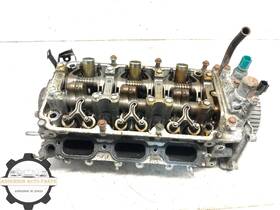
( Manufacturer Part Number: R9P-11 ), ( Part Type: Engine Motor Cylinder Head )
Review HONDA 3.5l Ivtec Engine Motor Cylinder Head Oem fits PILOT 2016–2022
The **Honda R9P-11 (2016 2022) Pilot 3.5L i-VTEC Engine Motor Cylinder Head** is a precision-engineered component designed to deliver exceptional performance, reliability, and efficiency in Honda s flagship midsize SUV. This cylinder head is a critical part of the **J35A4** 3.5-liter V6 i-VTEC engine, renowned for its seamless blend of power and fuel economy, making it a standout choice for both daily driving and spirited highway cruising. Crafted from high-grade aluminum alloy, the cylinder head features a **dual overhead camshaft (DOHC) design** with **four valves per cylinder (2 intake, 2 exhaust)**, allowing for optimized airflow and improved combustion efficiency. The **i-VTEC variable valve timing and lift electronic control system** dynamically adjusts valve timing and lift, enhancing throttle response, reducing emissions, and maximizing torque across the engine s operating range particularly noticeable in the mid-range power delivery that defines the Pilot s driving dynamics.
The cylinder head incorporates **intake and exhaust ports** meticulously shaped to promote efficient scavenging and charging, contributing to the engine s **280 horsepower and 262 lb-ft of torque** (in the standard configuration) while maintaining Honda s reputation for smooth, refined operation. Key features include **integrated spark plug bosses**, **high-pressure fuel injector ports**, and **precise valve guides and seats** designed to minimize wear and ensure long-term durability. The head also houses the **camshafts**, which are supported by **high-precision bearings** and driven by a **timing chain** (in contrast to some competitors that use belts), reducing maintenance complexity and enhancing reliability. For emissions compliance, the cylinder head integrates **OBD-II diagnostics** and may include **exhaust gas recirculation (EGR) and variable valve timing solenoids**, ensuring the engine meets stringent environmental standards without sacrificing performance.
Built to withstand the demands of modern driving, this cylinder head is engineered with **thermal management in mind**, featuring **coolant passages** that regulate operating temperatures to prevent overheating and extend component lifespan. The **intake manifold** (often integrated or closely coupled) directs air efficiently to the combustion chambers, while the **exhaust manifold** channels spent gases away, reducing backpressure and improving exhaust flow. For enthusiasts and mechanics, the cylinder head is designed with **serviceability in mind**, offering straightforward access for routine maintenance such as valve adjustment, spark plug replacement, and timing belt inspection. Whether used in a **stock application or as part of a performance upgrade**, this cylinder head exemplifies Honda s commitment to **precision engineering, fuel efficiency, and enduring performance**, making it a cornerstone of the Pilot s powertrain for its generation.
### **Pros and Cons of Buying a 2016 2022 Honda Pilot with the 3.5L i-VTEC Engine (R9P-11 Motor, Cylinder Head)**
#### **Pros**
1. **Reliability and Durability** The 3.5L i-VTEC V6 engine in the Honda Pilot is known for its robustness and longevity, especially when properly maintained. Honda s engineering ensures solid performance and fewer major issues compared to some competitors.
2. **Good Fuel Economy for a V6** The i-VTEC engine provides a balance between power and efficiency, offering around **18 20 MPG highway** (varies by model year and trim), which is decent for a midsize SUV with this engine size.
3. **Smooth Power Delivery** The i-VTEC system allows for variable valve timing, improving throttle response and reducing engine strain, making the Pilot feel more refined than many rivals.
4. **Strong Resale Value** Honda retains good resale value, and the Pilot (especially with the 3.5L engine) holds up well compared to some other SUVs in its class.
5. **Proven Transmission Pairings** The 3.5L engine is typically paired with Honda s **9-speed automatic transmission**, which is smooth and reliable when maintained.
6. **Low Maintenance Costs (Compared to Some Competitors)** Honda engines are generally cheaper to maintain than turbocharged or high-performance engines, with fewer complex components prone to failure.
7. **Comfortable Ride and Spacious Interior** The Pilot offers a smooth ride, ample cargo space, and a comfortable cabin, making it a practical choice for families or daily drivers.
8. **Available Safety Features** Later model years (2018 ) include Honda Sensing (standard on higher trims), which provides adaptive cruise control, lane-keeping assist, and collision mitigation adding value for safety-conscious buyers.
9. **Proven Oil Consumption Fixes** Early 2016 2017 models had some reports of oil consumption, but Honda issued recalls and software updates to address this. Later models (2018 ) are much improved in this regard.
10. **Good Towing Capacity (for a Non-Turbo V6)** The 3.5L engine can tow up to **3,500 5,000 lbs** (depending on trim), which is sufficient for light towing needs without the complexity of a turbocharged engine.
---
#### **Cons**
1. **Oil Consumption Issues (Early Models)** The 2016 2017 3.5L i-VTEC engines were notorious for consuming oil, sometimes burning **1 quart per 1,000 miles** in severe cases. Honda addressed this with **recalls (2017) and software updates (2018 models)**, but early owners may still face lingering concerns.
2. **Turbocharged Alternatives Are More Powerful** While the 3.5L i-VTEC is reliable, newer Honda Pilots (2023 ) offer a **turbocharged 2.0L V6 (R20A)**, which provides **more power (290 hp vs. 280 hp)** and better fuel economy. Buyers wanting modern performance may find the older 3.5L less exciting.
3. **Higher Maintenance Costs Than Naturally Aspirated Engines** The i-VTEC system adds complexity, and while not as expensive as turbocharged engines, maintenance (e.g., valve adjustments, timing chain checks) can be more involved than a simple inline-4.
4. **Potential Transmission Issues (Less Common but Possible)** Some owners report **rough shifting or delayed engagement** in the 9-speed automatic, though this is rare and often fixable with a software update or transmission fluid flush.
5. **Noisy Cabin (Compared to Some Rivals)** The 3.5L engine can be louder at highway speeds than some competitors (e.g., Toyota Highlander s 3.5L V6), though Honda has improved insulation in later models.
6. **Higher Purchase Price Than Smaller Engines** The 3.5L V6 is more expensive than a **2.4L or 2.0L turbo** option, meaning you pay a premium for the extra power and reliability.
7. **Recall History (Early Models)** Some 2016 2017 Pilots had recalls for **oil consumption, transmission issues, and electrical problems**, so thorough inspection is crucial before purchase.
8. **Less Efficient Than Modern Alternatives** Newer Honda Pilots (2023 ) with the **turbocharged 2.0L V6** offer **better MPG (26 30 highway)** and more power, making older 3.5L models feel outdated in comparison.
9. **Potential for Carbon Buildup (i-VTEC Engines)** The variable valve timing can lead to **carbon deposits** on intake valves over time, requiring occasional cleaning (though this is common in many modern engines).
10. **Resale Depreciation** While the Pilot retains value well, newer models with turbo engines and updated tech will depreciate faster, meaning an older 3.5L model may not hold value as strongly.
---
### **Ending Conclusion**
The **2016 2022 Honda Pilot with the 3.5L i-VTEC engine** is a **solid, reliable choice** for buyers who prioritize **durability, comfort, and low maintenance costs** over cutting-edge performance. It is **best suited for:**
- **Families or daily drivers** who need a spacious, comfortable SUV.
- **Buyers who want a proven engine** without the complexity of turbocharging.
- **Those who prefer Honda s reputation for longevity** over the latest tech.
However, **potential buyers should be cautious about:**- **Oil consumption in early models (2016 2017)** ensure the vehicle has had the recall fix and has a clean maintenance history.
- **The lack of modern efficiency and power** compared to newer turbocharged alternatives.
- **Higher upfront cost** compared to smaller-engine or non-Honda options.
If you **find a well-maintained 2018 model** with **proven oil consumption fixes and a clean service record**, it remains a **great value**. But if **fuel efficiency, towing, or performance** are top priorities, a **newer Honda Pilot with the turbo 2.0L V6** or a **Toyota Highlander with a 3.5L V6** may be worth considering.
### **Recommendation**
- **Buy if:** You want a **reliable, comfortable, and low-maintenance SUV** for daily use, and you can verify the engine has no oil consumption issues (especially for 2016 2017 models).
- **Avoid if:** You need **better fuel economy, more power, or the latest tech**, as newer turbocharged models offer significant advantages.
- **Best Approach:** **Get a pre-purchase inspection**, check **maintenance records (especially oil changes)**, and **verify recall fixes** before buying. A **2018 model** is the safest choice due to oil consumption improvements.
For most buyers, the **3.5L i-VTEC Pilot is a great used SUV**, but it s not the most advanced option available today. If budget allows, consider **newer models with turbo engines** for better efficiency and performance.
Details:
PARTS CAME OFF A 2016 HONDA PILOT AWD EX-L. 6-SPEED AUTOMATIC TRANSMISSION AWD. 3.5L iVTEC V6 ENGINE. 172,186 MILES.
part #: r9p11 prices
- $249.99-$310.00
specifications cylinderheapar:
- for models: Pilot
- for makes: Honda
- for years: 2016-2022
- mpn: R9p-11
- part type: Engine Motor Cylinder Head
general cylinderheapar:
- condition: Used
- Car Truck Parts Accessories > Engines Engine Parts > Cylinder Heads
returns cylinderheapar:
- policy: Returns Accepted
- paid by: Buyer
- time: 30 Days
payments cylinderheapar:
- credit card: Discover
- wallet: Paypal
- other
offer cylinderheapar:
- quantity: 1
- sold: 0
- availability: In Stock
- options: Ship-to-home
- started: April 3, 2026
seller cylinderheapar:
- # reviews: 14464
- rating: 99.9%
- city: Anderson, South Carolina
shipping cylinderheapar:
- class: Standard
- cost: $99.99
- type: Fixed
- transit: 4-7 Days
- service: Standard
Honda R9P-11 Is Similar To:
- 035-2142 Beck Arnley For Honda Accord Cylinder Head Gasket 049797910987 (35.5% similar) Cylinder head gasket by beck anally. Beginning with motorcycle parts in 1914 and transitioning to import vehicles the 1950 , brand understands deliver oe quality that matches what was originally on vehicle. Beginning with motorcycle parts in 1914 and transitioning to import vehicles the, brand ...(July 6th, 2018)
- 035-2150 Beck Arnley For Honda Civic Cylinder Head Gasket 049797912998 (35.7% similar) Cylinder head gasket by beck anally. Beginning with motorcycle parts in 1914 and transitioning to import vehicles the 1950 , brand understands deliver oe quality that matches what was originally on vehicle. Beginning with motorcycle parts in 1914 and transitioning to import vehicles the, brand ...(July 7th, 2018)
- 12200-568-030 Honda Cylinder Head With Valves And Exhaust As Shown (30.9% similar) Please refer to pictures for condition...(February 11th, 2019)
- 2530 Replace For Honda Civic Remanufactured Complete Cylinder Head 653517020797 (37.6% similar) Remanufactured complete cylinder head by replace. Completed assemblies are pressure tested to ensure water jacket integrity and then shipped in heavy-duty plastic containers prevent damage during transit. Valve spring installed height is checked and set to specification. If your vehicle has a ...(November 14th, 2018)
- 2531 Replace For Honda Prelude Remanufactured Complete Cylinder Head 653517021503 (35.8% similar) Unlike many companies that outsource production, replace has complete control of the engineering, design, and assembly everything they sell. Each head is manga-fluxed or dye checked for cracks and all guides are replaced, never knurled, to restore valve stem-to-guide clearance. Valve spring ...(October 22nd, 2018)
- 26196pt For Honda Accord Old Design Cylinder Head Gasket 614046782136 (36% similar) Old design cylinder head gasket 26196PT by feel-pro. Engineered using the latest technologies and global engineering resources, gaskets meet specific oem needs provide superior sealing performance durability needed to withstand unique characteristics of application...(July 7th, 2018)
- 26320pt For Honda Civic Cylinder Head Gasket 614046887107 (39.4% similar) Engineered using the latest technologies and global engineering resources, gaskets meet specific oem needs provide superior sealing performance durability needed to withstand unique characteristics of application. Notes: head bolt replacement recommended bolts not included specifications: gasket ...(July 8th, 2018)
- 81052600 Ajusa For Honda Accord Cylinder Head Bolt (40% similar) Part: 1998 -2005 prices...(November 15th, 2018)
- 9123pt For Honda Civic Cylinder Head Gasket 084113180385 (39.7% similar) Engineered using the latest technologies and global engineering resources, gaskets meet specific oem needs provide superior sealing performance durability needed to withstand unique characteristics of application. Cylinder head gasket 9123PT by feel-pro...(July 14th, 2018)
- 9915pt For Honda Civic Cylinder Head Gasket 614046643888 (39.7% similar) Cylinder head gasket 9915PT by feel-pro. Engineered using the latest technologies and global engineering resources, gaskets meet specific oem needs provide superior sealing performance durability needed to withstand unique characteristics of application...(July 14th, 2018)
- 9958pt-1 For Honda Accord Improved Design Cylinder Head Gasket 614046836556 (34.5% similar) Engineered using the latest technologies and global engineering resources, gaskets meet specific oem needs provide superior sealing performance durability needed to withstand unique characteristics of application. Improved design cylinder head gasket 9958PT-1 by feel-pro...(July 14th, 2018)