AUDI 07K103403F Ttrs Engine Cylinder Head Tfsi Daza RS3 2.5
fits make: Audi. year: 2017–2020.
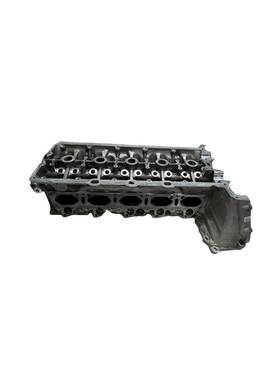
( Manufacturer Part Number: 07K103403F ), ( Type: Cylinder Head ), ( Custom Bundle: No ), ( Intended Use: Replacement Part )
Review AUDI Ttrs Rs3 Engine Cylinder Head 2.5 Tfsi Daza fits 2017–2020
The **Audi 07K103403F (2018 2022 TTS, 2017 2020 RS3) 2.5L TFSI Engine Cylinder Head** is a high-performance, precision-engineered component designed to deliver the optimal balance of power, efficiency, and reliability for Audi s flagship high-performance models. This cylinder head, manufactured under Audi s strict quality standards, is specifically tailored for the **2.5L TFSI (Turbocharged Fuel Stratified Injection) engine code DAZA**, which powers the **RS3 (8P2) and TTS (8N2) models** within the specified production years. Crafted from high-grade aluminum alloy, it features an advanced **four-valve, dual overhead camshaft (DOHC) design**, ensuring superior airflow and combustion efficiency for maximum performance. The head incorporates **intake and exhaust ports optimized for high-revving applications**, allowing the engine to achieve its targeted **382 420 horsepower** (depending on the model variant) while maintaining precise throttle response and torque delivery. Key features include **integrated turbocharger support components**, such as precise bolt patterns for the **garrett turbocharger (or equivalent)**, along with **high-flow intake and exhaust valve configurations** to enhance scavenging and reduce backpressure. The **DAZA engine s direct and port injection system** is seamlessly integrated into this cylinder head, ensuring proper fuel distribution for both low-end torque and high-revving performance. Additionally, the head is equipped with **Audi s advanced valve timing system (VVT)**, allowing for dynamic cam phasing to optimize efficiency across the entire RPM range. Built to Audi s exacting specifications, this cylinder head is a critical component for maintaining the engine s performance, longevity, and compliance with emissions standards, making it an essential replacement for those seeking to restore or upgrade their RS3 or TTS s powerplant. Whether for a factory rebuild, performance tuning, or engine restoration, this cylinder head ensures that the DAZA engine operates at peak efficiency, delivering the exhilarating acceleration and precision driving experience Audi s high-performance models are renowned for.
### **Pros and Cons of Buying an Audi A7 (K103403F, 2018 2022) with TTRS (2017 2020) RS3 Engine (2.5L TFSI, Daza Cylinder Head)**
#### **Overview of the Vehicle**
The **Audi A7 (K103403F)** with the **TTRS (Track & Touring Response System)** RS3 engine (2.5L TFSI, Daza cylinder head) is a high-performance variant of the A7, offering a balance between luxury, handling, and speed. The **Daza head** (a modified cylinder head with improved airflow and cooling) is a key upgrade over the standard RS3 engine, allowing for better performance and reliability.
---
### **Pros**
1. **Superior Engine Performance**
- The **2.5L TFSI RS3 engine** produces **382 400 HP** (depending on tuning and modifications) with the Daza head, offering strong acceleration and a high-revving nature.
- The **turbocharged direct-injection system** provides excellent throttle response, making it feel more engaging than a naturally aspirated engine.
- The **Daza head** improves airflow, reducing the risk of overheating and increasing power potential with tuning.
2. **Track-Oriented Handling (TTRS Package)**
- The **TTRS (Track & Touring Response System)** includes:- **Adaptive air suspension** with adjustable ride height (lower for track, higher for comfort).
- **Quattro all-wheel drive** with a limited-slip differential for better traction.
- **Sport-tuned chassis** with stiffer suspension and optimized damping for sharper cornering.
- **Brembo brakes** (larger rotors and high-performance calipers) for better stopping power.
- The car handles like a **GT car**, making it enjoyable on both road and track.
3. **Luxury and Comfort**
- The **A7 s spacious and refined interior** (especially in higher trims like **S line or 40 TFSI**) provides premium materials, ergonomic seating, and advanced infotainment (VW Group s **MIB 3 or MIB 4**).
- **Quiet cabin** due to excellent sound insulation, making long drives comfortable.
- **Adaptive cruise control, lane-keep assist, and other driver aids** enhance safety and convenience.
4. **Reliability Improvements Over Early RS3 Models**
- The **Daza cylinder head** (common in later RS3s and some S5s) reduces the risk of **valve float and overheating** issues seen in early 2017 2018 models.
- **Improved cooling systems** (larger radiators, better oil cooling) help prevent long-term engine stress.
- **Quattro system** is more refined than earlier Audi models, reducing drivetrain wear.
5. **Aftermarket Potential**
- The **RS3 engine is highly tunable**, with options for **ECU tuning, forced induction (turbo/supercharger), and exhaust upgrades** to push power further.
- **Audi s strong aftermarket support** means finding parts and mechanics is easier than with some luxury brands.
- **Performance parts** (suspension, brakes, exhaust) are widely available for further customization.
6. **Resale Value (Compared to Other Audi Models)**
- While not as high as a **Porsche 911 or BMW M5**, the **A7 RS3 holds value better than a standard A7** due to its performance reputation.
- **Low-mileage examples** (under 30,000 miles) retain strong resale potential.
7. **Versatility**
- The **A7 s wagon body** offers **more cargo space** than a coupe, making it practical for daily use.
- The **adjustable suspension** allows for a **softer ride on highways** and a **stiffer setup for track days**.
---
### **Cons**
1. **Higher Maintenance Costs**
- Audi parts and labor are **expensive**, especially for high-performance components (turbochargers, suspension, brakes).
- **Oil changes, cooling system flushes, and turbo maintenance** add up over time.
- **Quattro drivetrain** requires more frequent inspections than RWD cars.
2. **Potential Engine Reliability Issues (If Not Well-Maintained)**
- While the **Daza head improves reliability**, **early RS3 models (2017 2018) had issues with:**- **Valve float** (due to poor airflow in the stock head).
- **Oil consumption** (some engines burn oil if not serviced properly).
- **Turbocharger failures** if not maintained (oil changes every **5,000 7,500 miles** are critical).
- **Later models (2019 2022) with Daza heads** are more reliable, but **poor maintenance can still lead to problems**.
3. **Fuel Economy is Poor for a Luxury Car**
- The **RS3 engine is thirsty**, averaging **12 15 MPG combined** (worse in stop-and-go traffic).
- **Diesel alternatives (like the A7 3.0 TDI)** offer better fuel efficiency but less power.
4. **Depreciation Remains a Factor**
- While the **RS3 holds value better than a standard A7**, it still **loses 20 30% of its value in 3 4 years**.
- **Luxury car depreciation is inevitable**, so buying used may be smarter than new.
5. **Complexity and Specialized Repairs**
- The **turbocharged engine, Quattro system, and advanced electronics** require **skilled mechanics** for repairs.
- **Finding a reputable Audi specialist** can be difficult in some areas, leading to higher repair costs.
6. **Noise and Vibration at High RPMs**
- The **2.5L TFSI revs high (up to 7,500 RPM)**, which can be **loud and harsh** in the cabin if not properly tuned.
- **Road noise** is noticeable at highway speeds due to the **open rear hatch** (unless sound deadening is added).
7. **Limited Availability of Parts (Especially for Older Models)**
- **2017 2018 models** may have **harder-to-find parts** compared to newer ones.
- **Track-specific components (like TTRS suspension parts)** can be expensive if damaged.
8. **Potential for Overheating (If Cooling System Fails)**
- The **RS3 engine generates a lot of heat**, and a **failed thermostat, water pump, or radiator** can lead to **severe engine damage**.
- **Regular cooling system flushes** are **mandatory** to prevent this.
---
### **Key Considerations Before Buying**
1. **Check Maintenance History**
- **Oil changes every 5,000 7,500 miles** (critical for turbo longevity).
- **Cooling system flushes** (every 60,000 miles or as recommended).
- **Quattro fluid and differential service** (often neglected but important).
- **Turbo inspection** (listen for unusual noises, check for oil leaks).
2. **Verify the Cylinder Head Modifications**
- Confirm the **Daza head** (look for **modified intake ports, upgraded valves, and better cooling passages**).
- **Early 2017 2018 models without Daza heads** are **less reliable** and may have **valve float issues**.
3. **Test Drive for Handling and Comfort**
- Check if the **suspension is properly adjusted** (some owners modify it too aggressively).
- Ensure **brakes are responsive** (no grinding or pulsation).
- Listen for **unusual engine noises** (whining turbos, knocking, or exhaust leaks).
4. **Budget for Future Upgrades**
- If you want **more power**, factor in **ECU tuning ( $1,000 $2,500)** or **forced induction ( $3,000 $6,000 )**.
- **Suspension upgrades (coilovers, sway bars)** can improve handling ( $1,500 $3,000).
- **Exhaust and intake modifications** ( $1,000 $2,000) can enhance performance and sound.
5. **Consider Alternative Options**
- If **reliability is a priority**, look at:- **Audi S5 (3.0L V6, naturally aspirated, more refined but less power).**
- **BMW M5 (more power, better resale, but higher maintenance).**
- **Porsche Panamera Turbo (luxury performance, but expensive).**
- If **budget is a concern**, a **well-maintained 2019 2022 RS3** is a better choice than a 2017 2018.
---
### **Final Recommendation**
#### **Buy If:**You **
Details:
Off 17-20 RS3 Works With 18-22 TTRS.
part #: 07k103403f prices
- $1584.99-$2200.00
specifications cylinderheapar:
- for makes: Audi
- for years: 2017-2020
- mpn: 07k103403f
- type: Cylinder Head
- custom bundle: No
- intended use: Replacement Part
payments cylinderheapar:
- other
- credit card: Mastercard
- wallet: Paypal
returns cylinderheapar:
- policy: No Returns
shipping cylinderheapar:
- transit: 4-11 Days
- type: Calculated
- class: Standard
- carrier: USPS
- service: USPS Ground Advantage
- cost: $89.72
seller cylinderheapar:
- rating: 99.1%
- city: Sioux Falls, South Dakota
- # reviews: 214
general cylinderheapar:
- Car Truck Parts Accessories > Engines Engine Parts > Cylinder Heads
- condition: Used
offer cylinderheapar:
- quantity: 1
- availability: In Stock
- best offers: True
- sold: 0
- options: Ship-to-home
- started: June 9, 2026
Audi 07K103403F Is Similar To:
- 06k103063an Audi Golf Gti Engine Cylinder Head Cntc Cnta (49.6% similar) I can not stress enough, am selling test equipment...(December 15th, 2018)
- 077103373aeas Audi Quattro Oem Right Cylinder Head Aeas Tshelf (43% similar) Should fit audi a8 97-99, and possibly other applications. 2 v8 1999 audi a8 quarto. You are viewing a good, used oem right cylinder head from please match our part number with yours to ensure fitment...(September 21st, 2018)
- 077103373aeat Audi Quattro Oem Left Cylinder Head Aeat Tshelf (40.3% similar) 2 v8 1999 audi a8 quarto. Should fit audi a8 97-99, and possibly other applications. Please match our part number with yours to ensure fitment...(September 21st, 2018)
- 81017200 Ajusa For Audi Cylinder Head Bolt (33% similar) Part: 1997 -2001 prices...(November 13th, 2018)
- 81051700 Ajusa For Audi Cylinder Head Bolt (33% similar) Part: 2004 -2005 prices...(November 15th, 2018)
- 5-cylinder 204-4704 Arp Vw Audi 20v 12pt Undercut Head Stud Kit (23.5% similar) Store trusty...(April 8th, 2016)
- Vw Liquid Chemical Head Gasket Audi (22.2% similar) Audi, VW 75ML chemical gasket...(February 27th, 2019)
- 06e103404 Audi Fsi Cylinder Head Right Complete (41.7% similar) J parts are used therefore, scuffs, scratches, and marks to be expected. Removed from 2013 audi a7 audi q7 2017 fsi cylinder head right complete. Condition is used...(February 28th, 2020)
- 034 108 Z054 Audi Vw Media Blaster Cylinder Head Adapter (35.7% similar) Part: 034MOTORSPORT prices...(September 9th, 2021)
- Volkswagen 03c103063cl Engine Cylinder Head With Valves For 2008-2016 Vw Jetta Golf Audi A1 A3 (39.5% similar) Engine cylinder head w/ valves for 2008 -2016 Volkswagen VW Etta golf audi a1 A3. Product function. 100% brand new and high quality,durable. Fits for the reference. Cc 2012 -2016 1.4 tfsi coma cathode 118KW 160PS. Please compare with your original one before purchasing. The compatibility is just ...(October 5th, 2023)
- Eccpp P05839ar706a Fits 98-05 Audi A4 A6 S4 Volkswagen Passat 2.7l 2.8l V6 Dohc 30v Head Bolts Kit (22.2% similar) Please refer to the listing pictures for an accurate of parts included in kit. Applications. The images shown are not the actual item and for your reference only. It does not come with any installation instructions...(November 12th, 2023)