VOLKSWAGEN 03L105101B Vw Tdi Diesel Crankshaft Standard 2.0L 38AA
fits model: Golf, Jetta. make: Volkswagen. year: 2012–2014.
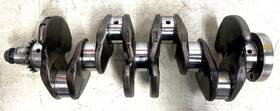
( Manufacturer Part Number: 03L105101B ), ( Country Of Origin: Germany ), ( Non-domestic Product: No ), ( Brand Type: Genuine Oem ), ( Fitment Type: Direct Replacement ), ( Type: Crankshaft ), ( Year: 2013 ), ( Placement: Front ), ( Manufacturer Warranty: 1 Month )
Review VOLKSWAGEN Vw 2.0l Tdi Diesel Crankshaft Standard Oem fits GOLF JETTA 2012–2014
The **Volkswagen 03L105101B 2.0L TDI Diesel Crankshaft (38AA)** is a precision-engineered component designed specifically for the 2.0L TDI diesel engine found in Volkswagen models such as the **Golf (MK5, MK6), Jetta (MK5, MK6), and Passat (B6, B7)** from the years **2012 through 2014**. This crankshaft is a critical part of the engine s power delivery system, responsible for converting linear piston motion into rotational force that drives the vehicle s drivetrain. Crafted from high-grade **forged steel**, this crankshaft is built to withstand the intense stresses of diesel combustion, ensuring durability, reliability, and optimal performance under demanding conditions. The **38AA** designation refers to its specific design and fitment, featuring **five main journals** and **two counterweights**, which balance the engine s reciprocating mass to minimize vibration and enhance smooth operation. Engineered with Volkswagen s stringent quality standards, this crankshaft is compatible with the **EA189 engine family**, which powers these models, and is designed to meet or exceed the original equipment manufacturer s specifications. Whether replacing a worn or damaged crankshaft or upgrading for enhanced longevity, this part is a direct-fit solution that maintains the engine s factory performance while ensuring compatibility with the vehicle s timing system, bearings, and other drivetrain components. Its robust construction and precision machining make it an ideal choice for both professional mechanics and DIY enthusiasts seeking to restore or maintain the efficiency and power output of their Volkswagen TDI engine.
### **Pros and Cons of Buying a 2012 2014 Volkswagen Golf/Jetta 2.0L TDI (Crankshaft 38AA, Part Number 03L105101B)**
#### **Pros**
1. **Fuel Efficiency** The 2.0L TDI engine is known for its strong fuel economy, typically achieving **30 40 MPG combined** in city and highway driving, making it cost-effective for long-distance travel.
2. **Reliability (with proper maintenance)** When maintained correctly, the 2.0L TDI is a durable diesel engine. Many owners report **150,000 miles** with minimal issues if oil changes, fuel system care, and emissions-related maintenance are kept up.
3. **Torque & Performance** The TDI provides **strong low-end torque**, making it well-suited for towing light loads or driving in hilly regions. The engine feels responsive compared to some gasoline alternatives.
4. **Resale Value** Diesel VWs, especially well-maintained TDIs, hold their value better than many gasoline-powered cars, particularly in regions where diesel fuel is still widely available.
5. **Durability of Key Components** The **38AA crankshaft** (a common variant in this engine family) is robust, and the **2.0L TDI s common rail direct injection system** is generally reliable if fuel injectors and high-pressure fuel pump are serviced.
6. **Availability of Parts & Aftermarket Support** As a widely used diesel engine, parts (including the **DPF, EGR, and turbo**) are relatively easy to find, though some aftermarket solutions may be required for emissions-related failures.
7. **Potential for Modifications** Enthusiasts can upgrade components like **turbochargers, exhaust systems, or fuel injectors** to improve performance, though this requires careful consideration of emissions compliance.
8. **Lower Running Costs (if maintained)** Diesel fuel historically offers better mileage, and the engine s longevity can reduce long-term ownership expenses compared to gasoline alternatives.
---
#### **Cons**
1. **DPF (Diesel Particulate Filter) Issues** One of the most common problems in these models is **DPF clogging**, which can occur due to **short trips, low-speed driving, or poor fuel quality**. A clogged DPF requires **professional regeneration or replacement**, costing **$1,500 $3,000 **.
2. **EGR (Exhaust Gas Recirculation) Problems** The EGR system is prone to **carbon buildup**, leading to **rough idling, loss of power, or check engine lights**. Cleaning or replacing the EGR cooler and passages is often necessary.
3. **Turbocharger Wear** Some owners report **turbo failure** due to **oil starvation or poor maintenance**, leading to **compression loss and reduced performance**. Regular oil changes (every **5,000 7,500 miles**) are critical.
4. **Fuel System Failures** The **high-pressure fuel pump** and **fuel injectors** can wear out, causing **misfires, poor acceleration, or increased emissions**. Replacement costs can be **$1,000 $2,500**.
5. **Emissions-Related Recalls & Modifications** Volkswagen has had **recalls for emissions violations** (e.g., **DEF fluid leaks, DPF failures, or EGR issues**). Some owners may need to **update software or replace components** to pass emissions tests.
6. **Cold Weather Struggles** Diesel engines, including the 2.0L TDI, can be **less efficient in cold climates** due to **fuel gelling, DPF regeneration difficulties, or glow plug issues**. A **block heater** may be necessary in freezing conditions.
7. **Higher Upfront Costs (if buying used)** Due to **common diesel-specific issues**, these cars may have **higher repair costs** than comparable gasoline models. A **pre-purchase inspection (PPI) is strongly recommended**.
8. **Limited Aftermarket Support for Some Issues** While parts exist, **some emissions-related fixes (e.g., DPF bypasses) may violate warranty or emissions laws** in certain regions, making unofficial modifications risky.
9. **Oil Consumption Concerns** Some owners report **oil burning**, particularly if the **PCV system or valve seals** fail. Regular oil checks are essential.
10. **Resale Depreciation (in some markets)** As **gasoline hybrids and electric cars gain popularity**, diesel VWs may lose value faster in regions where diesel fuel is becoming less common.
---
### **Key Considerations Before Buying**
- **Maintenance History** The **most critical factor**. Ensure the car has **regular oil changes (diesel-specific oil), DPF regenerations, EGR cleanings, and fuel system servicing**.
- **DPF Condition** If the car has **high mileage (100,000 miles)**, check for **DPF clogs** (symptoms include **reduced power, check engine light, or "regeneration needed" messages**).
- **EGR & Turbo Health** Listen for **whining noises (turbo) or rough idling (EGR)**. Carbon buildup in the EGR can be expensive to fix.
- **Fuel Injector & Pump Status** **Misfires or hesitation** may indicate failing injectors or a worn fuel pump.
- **Emissions Compliance** Some states require **passing an emissions test**, which may fail if the **DPF, EGR, or catalytic converter** is failing.
- **Defensive Driving** If you **mostly drive short distances**, the DPF will clog faster. **Long highway trips (20 minutes) help prevent DPF issues**.
---
### **Conclusion & Recommendation**
#### **Best For:**- **Owners who drive mostly highway miles** (reduces DPF clogging risk).
- **Those who can afford regular diesel-specific maintenance** (oil changes, fuel system care).
- **Buyers in regions where diesel fuel is still widely available** (avoids fuel supply issues).
- **People who need strong torque for towing or hilly driving**.
#### **Avoid If:**- You **mostly drive short trips** (DPF will clog quickly).
- You **cannot afford potential DPF, EGR, or turbo repairs** ($1,500 $3,000 for major failures).
- You **live in a state with strict emissions laws** and cannot pass an emissions test.
- You **don t have access to a mechanic experienced with diesel VWs**.
#### **Final Recommendation:**- **If you find a well-documented, low-mileage (under 100,000 miles) example with a clean maintenance history**, this can be a **great long-term investment**.
- **If the car has high mileage or unclear maintenance records**, **budget for potential DPF, EGR, or turbo repairs** or consider a **gasoline alternative**.
- **Always get a pre-purchase inspection (PPI) from a diesel specialist** before buying.
- **Prioritize models with:**- **No DPF regeneration failures**
- **Clean EGR system (no carbon buildup)**
- **No turbo whining or oil leaks**
- **Full service records (especially oil changes and fuel system work)**
**Verdict:** The **2012 2014 2.0L TDI Golf/Jetta (38AA crankshaft) is a solid choice for the right buyer** one who is **prepared for diesel-specific maintenance and drives enough to avoid DPF issues**. For those who cannot meet these conditions, a **gasoline or hybrid alternative** may be a safer bet.
Details:
part #: 03l105101b prices
- $399.99-$429.99
specifications cylinderheapar:
- for models: Golf, Jetta
- for makes: Volkswagen
- for years: 2012-2014
- mpn: 03l105101b
- country of origin: Germany
- non-domestic product: No
- brand type: Genuine Oem
- fitment type: Direct Replacement
- type: Crankshaft
- year: 2013
- placement: Front
- manufacturer warranty: 1 Month
payments cylinderheapar:
- wallet: Paypal
- other
- credit card: Mastercard
general cylinderheapar:
- Car Truck Parts Accessories > Engines Engine Parts > Cylinder Heads
- condition: Used
shipping cylinderheapar:
- type: Fixed
- carrier: USPS
- transit: 5-12 Days
- class: Standard
- service: USPS Ground Advantage
- cost: $20.00
returns cylinderheapar:
- time: 30 Days
- policy: Returns Accepted
- paid by: Buyer
seller cylinderheapar:
- city: North Miami Beach, Florida
- rating: 0.0%
- # reviews: 84
offer cylinderheapar:
- quantity: 1
- best offers: True
- started: February 21, 2026
- availability: In Stock
- sold: 0
- options: Ship-to-home
Volkswagen 03L105101B Is Similar To:
- 113129710d 113129709g Volkswagen Beetle Oem (27.1% similar) These dual port vw 1600 air-cooled intake manifolds are in good condition. From about 1967 or so...(December 2nd, 2017)
- 26142pt For Volkswagen Jetta Cylinder Head Gasket 614046875586 (30.2% similar) Cylinder head gasket 26142PT by feel-pro. Engineered using the latest technologies and global engineering resources, gaskets meet specific oem needs provide superior sealing performance durability needed to withstand unique characteristics of application...(July 8th, 2018)
- 26547pt For Volkswagen Jetta Cylinder Head Gasket 019826520289 (30.2% similar) Cylinder head gasket 26547PT by feel-pro. Engineered using the latest technologies and global engineering resources, gaskets meet specific oem needs provide superior sealing performance durability needed to withstand unique characteristics of application...(November 26th, 2018)
- 3730 Victor Reinz For Volkswagen Jetta Composite Cylinder Head 725975269848 (31.4% similar) Oem composite cylinder head gasket by victor rein. Increasing torque and performance with decreasing consumption emissions. As a leader in technology, an original equipment manufacturer transfers all of his expertise, experience and quality into the replacement parts business. It carries everything ...(August 16th, 2018)
- Ahg921 Apex Cylinder Head Gasket New For Vw Volkswagen Beetle Jetta (22% similar) The manufacturer APOS warranty shall be exclusive remedy for any such product defect or failure. Please for any questions. Please refer to the manufacturer APOS instructions ensure that you can take advantage of your product warranty. Some manufacturers require that you register your product to ...(February 15th, 2019)
- Gs33406 Victor Reinz For Volkswagen Jetta Standard Cylinder Head 027067449351 (33.3% similar) In fact, many of manufacturers are suppliers to the vehicle manufacturers, so parts you get from company may be same as ones that came on your car or truck. As a leader in technology, an original equipment manufacturer transfers all of his expertise, experience and quality into the replacement parts...(August 19th, 2018)
- Pznrv32020001 Prozone New Cylinder Head Bolt For Vw Volkswagen Beetle Jetta (20.9% similar) Each warranty gives you specific rights, and may have other rights which vary from state. This product is covered with 18 months limited pr ozone warranty. The manufacturers warranty shall be exclusive remedy for any such product defect or failure. Replace your aged or defective part, today. Please ...(March 15th, 2019)
- 068103265 068103373 068103265bv Volkswagen Golf Vanagon Cylinder Head 1.6 Diesel Mk1 T25 Bv Oem (35.4% similar) Many different variables go into what parts fit what vehicles. Engine size, transmission, model, wheel drive, and many more. The original package must be included and intact. Therefore some of the boxes or original packaging may be slightly scuffed, dirty, or show other signs of having been handled ...(February 15th, 2016)
- W0133-1904064-rei Victor Reinz Volkswagen Jetta Cylinder Head Gasket Set (28.4% similar) The development goals in engine construction determine requirements of modern gasket systems. With a broad product palette, victor rein supplies cylinder head gaskets for all conventional passenger car and commercial vehicle engines. In fact, many of manufacturers are suppliers to the vehicle ...(May 4th, 2018)
- W0133-2046192-oes Genuine For Volkswagen Jetta Cylinder Head Plug (28.4% similar) No traffic, standing in line, order from the comfort of your home or office. Genuine carries everything needed to complete the job, including gasket sealer and motor oil. Cylinder head plug by genuine. Do recognize name on box. How know re getting best price. Won't those concerns with genuine ...(July 6th, 2018)
- Victor Reinz 06a 103 384 C Volkswagen Beetle Golf Getta 1998-2006 Cylinder Head Bolt 10x115 Mm Set 10 (33.3% similar) Part applications. Volkswagen beetle golf Etta 1998 -2006 cylinder head bolt 10X115MM set of 10 victor rein 1YEAR warranty: 10 x 115MM , brand new part with full 1 year warranty, note: listing is for PCs, vw #06A 103 384 c, made by. All parts have 1 year warranty...(August 17th, 2023)